Opinion: Patient Engagement Isn’t Sustainable Without Intentional System Design and a Leadership Development Pipeline
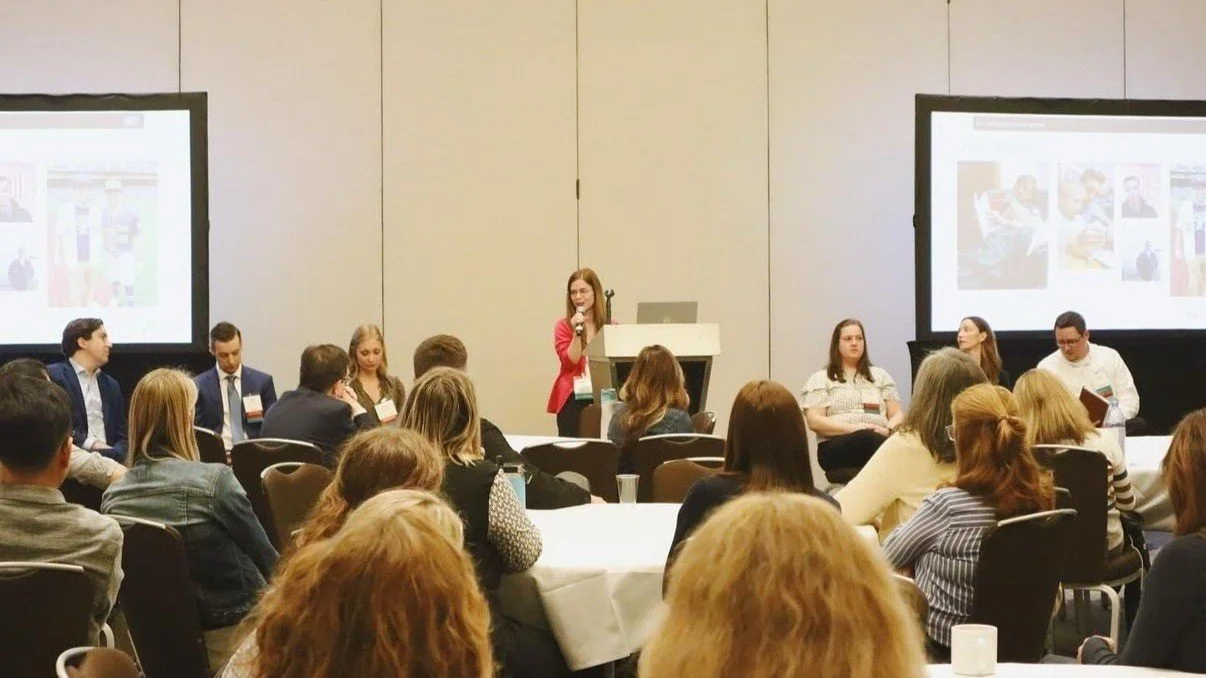
All patient panel at the 2024 Single Ventricle Patient Day at the Fontan Outcomes Network Fall Learning Session in St. Louis.
Over the past 15 years, I’ve worked across patient, nonprofit, and clinical spaces. I’ve seen how impactful patient engagement can be when it’s designed with structure and intention.
Too often, patients are invited to contribute without a clear trajectory for deeper involvement, leadership growth, or long-term career development. While programs may begin with strong momentum, they often stall when long-term involvement is not intentionally planned alongside one-time engagement opportunities. This isn’t due to a lack of will, but it reflects how systems have not always been designed to foster sustained partnerships with patients.
This gap spans organizations and sectors. Early in my career, I joined the design team for a learning health network as a patient lead, focused on improving outcomes in Fontan care. The network’s infrastructure was intentionally built to support co-produced research, with patients and families involved at every stage and leadership roles clearly defined. In collaboration with three other individuals living with single ventricle and in partnership with the network, we established a global patient day designed to foster connection, education, and partnership among patients, clinicians, and researchers. Held annually alongside the network’s fall meeting since 2019, the event continues to demonstrate what long-term, trust-based engagement pathways can achieve when grounded in shared purpose.
These experiences made one thing clear: participation alone isn’t enough to offer the community. To create meaningful and lasting engagement, we need to invest in the people who shape systems and build intentional pathways for patient leadership.
We Can’t Build Systems Without Building Leaders
Engagement efforts often begin with strong values such as listening, inclusion, and visibility. However, values alone do not create lasting change. Without structure, even the most well-intentioned initiatives struggle to maintain momentum. Patient leadership does not develop on its own; it must be intentionally supported.
We need systems that:
Identify and support the growth of patient and caregiver leaders
Provide mentorship, training, and education opportunities
Prepare patients to participate in governance, research, policy, and strategic decision-making
Value lived experience alongside skills like communication, systems thinking, and research literacy
Build continuity through succession planning
Patients should have opportunities to gain experience, build trust, and take on meaningful roles. Engagement becomes sustainable when it includes mentorship, training, and clearly defined responsibilities that support long-term involvement.
In her book Rebel Health, Susannah Fox explores how patients are finding new opportunities to take their care into their own hands. They take on roles such as:
Seekers
Solvers
Networkers
Champions
These archetypes reflect the many ways patients drive change, support others, and solve problems for themselves and for their communities. They represent systems-level thinking and creativity often overlooked by traditional healthcare structures. Recognizing these archetypes means building real infrastructure that allows patients to apply their expertise in lasting, meaningful ways.
Why Sustainable Engagement Requires Structure
When systems don’t plan for leadership, or don’t create pathways for patients to apply their skills, the consequences are predictable.
Programs stall when one advocate steps away
Organizational memory fades without continuity
Passionate, mission-driven patient leaders go unsupported or unpaid
Systems lose valuable insights that could improve strategy and outcomes
Engagement is often discussed in moral or ethical terms, but it also offers strategic value. Systems that embed patient leadership from the start see stronger retention, better-aligned programs, and deeper relationships with their communities.
Unlike most professional fields, patient engagement often lacks formal career pathways. Many people begin by serving on advisory councils, speaking at events, or contributing to research, but these roles are rarely connected to sustained growth within a system. To make engagement sustainable, we have to treat it as a professional identity and support it accordingly.
This means offering:
Professional development and training
Opportunities to take on increasing responsibility
Progression that reflects growing expertise and experience
By doing this, we move from participation to partnership to leadership development.
What I’ve Seen Work
Across my work, I’ve seen patient leadership thrive in systems intentionally built for growth, collaboration, and long-term involvement.
I’ve worked with organizations to move beyond token input by embedding patient leadership into core operations. At one large nonprofit, integrating patient voices throughout strategic planning resulted in more aligned priorities, stronger program retention, and clearer accountability. In other efforts, I helped redesign programs from the ground up with patients involved from day one. These approaches consistently led to faster implementation timelines, improved satisfaction from both patients and team members, and solutions that better reflected community priorities.
I’ve also had the opportunity to share these lessons with broader audiences. At the 2023 World Congress of Pediatric Cardiology and Cardiac Surgery, I presented on how patient-provider engagement frameworks can be designed to match individual capacity, lived experience, and interests. Systems that adapt in this way are more likely to grow with the people they serve and remain relevant over time.
There are also models in the field that prove this works. PCORI’s Engagement Building Awards Program shows what structured support can do for long-term collaboration. Novo Nordisk’s DEEP model brings patients into treatment development early, positioning them as expert partners with defined roles. These go beyond examples of inclusion; they represent frameworks that actively support shared leadership.
The Future of Engagement Is Operational and Structural
In Thinking in Systems, Donella Meadows wrote that systems produce the results they are designed to deliver. If engagement feels short-lived or symbolic, it’s likely because it was never designed to do more. Real change means reworking the system itself, starting with how we define, support, and value patient leadership.
To create inclusive and effective systems, we need to prioritize engagement with the same level of planning and investment as any other strategic initiative. This includes compensation, policy, training, and role design. Without this infrastructure, engagement efforts remain isolated and unsustainable.
Let’s Continue to Build What Comes Next
We’re not starting from scratch. Many advocates, professionals, and communities have already opened doors and built pathways to elevate the patient voice. Now we need to make sure those doors stay open and build the infrastructure that helps others continue to step through and lead.
Here’s how we continue shifting engagement from symbolic to structural:
Design roles with built-in growth paths that recognize both lived experience and personal expertise:
Offer mentorship and coaching opportunities tailored to individual strengths
Compensate individuals fairly for their time, insights, and contributions
Integrate patient leadership into system planning and decision-making structures with attention to diverse skill sets beyond diagnosis
I’ve seen the difference it makes when patients are treated as more than their diagnosis and when patient leadership is integrated into systems as a core component, not merely added on. This cultural shift and infrastructure development demonstrate what is possible when patient engagement is built into system design and recognized as a critical driver of both innovation and impact.
